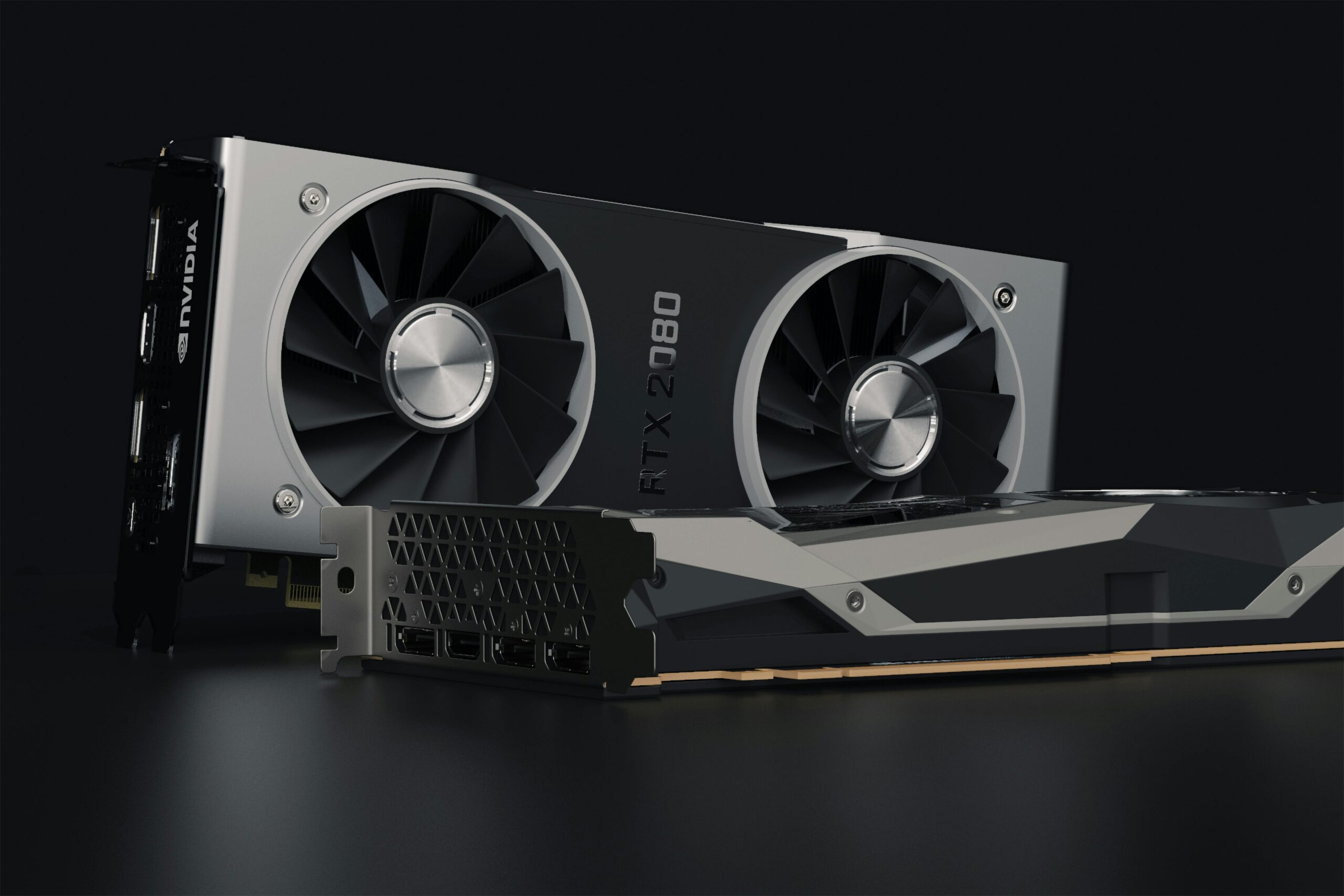
If you’ve played a modern video game, trained an AI model, or watched a movie with stunning visual effects, there’s a good chance an NVIDIA GPU was involved. While NVIDIA started as a graphics company focused on making games look better, its graphics processing units (GPUs) have grown into a central force driving industries far beyond gaming.
In 2025, NVIDIA isn’t just a hardware company — it’s a technology powerhouse shaping the future of computing.
What Is a GPU, and How Does NVIDIA Fit In?
A GPU, or Graphics Processing Unit, is a specialized chip designed to handle complex calculations, especially those related to rendering images, animations, and video. Unlike CPUs (central processing units), which handle general-purpose tasks, GPUs excel at parallel processing — performing thousands of calculations simultaneously.
NVIDIA, founded in 1993, pioneered modern GPU architecture. Its GeForce brand became synonymous with PC gaming performance, while its professional-grade Quadro and data center GPUs built a reputation for scientific computing, AI training, and 3D rendering.
Today, NVIDIA GPUs power everything from gaming rigs to self-driving cars.
The Role of NVIDIA in Gaming
High-Fidelity Graphics
NVIDIA’s consumer-focused GeForce GPUs have consistently pushed the limits of visual realism. Features like ray tracing simulate the way light behaves in real life, producing shadows, reflections, and lighting effects that were once impossible in real time.
AI-Driven Performance Boosts
NVIDIA’s DLSS (Deep Learning Super Sampling) technology uses AI to upscale lower-resolution images, giving gamers higher frame rates without sacrificing visual quality. DLSS 3, released in recent years, can even generate entire frames using AI, dramatically improving performance.
VR and AR Experiences
From VR headsets to AR-enhanced games, NVIDIA GPUs ensure smooth performance and immersive visuals, reducing motion sickness and improving realism.
Cloud Gaming
Through GeForce NOW, NVIDIA allows players to stream high-end games from the cloud to virtually any device. This eliminates the need for expensive hardware upgrades and makes high-performance gaming more accessible.
NVIDIA and Artificial Intelligence
While gaming put NVIDIA on the map, AI is one of the main reasons the company dominates tech headlines today.
AI Training and Inference
Modern AI models — from chatbots to image recognition systems — require massive amounts of computation. NVIDIA’s CUDA platform and Tensor Cores make GPUs ideal for training these models efficiently. That’s why many AI researchers and companies choose NVIDIA hardware for their projects.
Autonomous Vehicles
NVIDIA’s DRIVE platform uses powerful GPUs to process real-time data from cameras, radar, and LiDAR in self-driving cars. The system helps vehicles “see,” “think,” and make split-second decisions.
Healthcare and Research
In medical imaging, NVIDIA GPUs speed up the analysis of CT scans, MRIs, and genomic data. This can lead to faster diagnoses and more personalized treatments.
Generative AI
From creating art to composing music, generative AI applications rely heavily on GPU acceleration. NVIDIA’s software frameworks make it easier for developers to create these next-gen tools.
Beyond Gaming and AI: Other Industries Relying on NVIDIA GPUs
Film and Animation
Studios use NVIDIA GPUs for rendering special effects and 3D animations. With tools like NVIDIA Omniverse, artists can collaborate in real time on complex visual projects.
Engineering and Design
Architects and engineers use NVIDIA-powered workstations for CAD (computer-aided design) and simulations, enabling more accurate and faster prototyping.
Scientific Research
From simulating climate change to modeling molecular structures, researchers use NVIDIA GPUs for tasks that would take years to complete on traditional CPUs.
Finance
In high-frequency trading, milliseconds matter. NVIDIA GPUs help financial institutions process massive datasets and run complex predictive models faster.
Key NVIDIA Technologies Shaping the Future
Ray Tracing
By accurately simulating light behavior, ray tracing creates ultra-realistic scenes. NVIDIA’s RTX technology makes this possible in real time, transforming both gaming and professional visualization.
DLSS (Deep Learning Super Sampling)
DLSS uses AI to produce high-quality images while reducing the GPU workload, allowing for smoother gameplay and lower power consumption.
CUDA (Compute Unified Device Architecture)
CUDA is NVIDIA’s software platform that lets developers use GPUs for general-purpose computing, not just graphics. It’s the backbone of NVIDIA’s expansion into AI, scientific computing, and more.
Omniverse
NVIDIA Omniverse is a collaborative platform that allows designers, engineers, and creators to work together on shared 3D projects, regardless of the software they’re using.
Why NVIDIA Dominates the GPU Market in 2025
- Cutting-Edge R&D – NVIDIA invests heavily in research, consistently releasing innovations ahead of competitors.
- Ecosystem Strength – Its combination of hardware, software, and developer tools makes it hard for rivals to match.
- Market Diversification – While gaming is still huge, NVIDIA’s foothold in AI, automotive, and enterprise markets makes it more resilient to market shifts.
Challenges and Criticisms
NVIDIA’s dominance doesn’t come without challenges:
- High Prices – Top-tier GPUs can be expensive, putting them out of reach for some consumers.
- Supply Chain Issues – The chip shortage of the early 2020s showed how vulnerable tech manufacturing can be.
- Competition – AMD and Intel are constantly pushing to catch up in both gaming and AI hardware.
- Energy Consumption – High-performance GPUs require a lot of power, raising environmental concerns.
The Future of NVIDIA GPUs
Looking ahead, NVIDIA is focusing on:
- More Energy-Efficient Designs – Balancing performance with sustainability.
- AI-Enhanced Everything – From real-time translation to AI-generated game worlds.
- Metaverse Development – Using Omniverse and RTX tech to build immersive virtual worlds.
- Expanding Cloud Solutions – Making high-end computing accessible without local hardware.
In short, NVIDIA is positioning itself not just as a GPU maker but as a leader in accelerated computing — a category that will power much of the digital future.
Why You Should Care
Even if you’re not a gamer or a tech professional, NVIDIA’s innovations affect you:
- Your smartphone camera uses AI tech powered by similar GPU principles.
- Your favorite streaming service relies on GPU-accelerated servers for smooth playback.
- Future advancements in healthcare, transportation, and even climate science may be driven by NVIDIA hardware.
In 2025, NVIDIA isn’t just about graphics — it’s about shaping how we work, play, and solve the world’s biggest problems.
Final Thought
From pixel-perfect gaming visuals to breakthroughs in AI and scientific discovery, NVIDIA GPUs have evolved far beyond their original purpose. They’re the engines behind some of the most exciting developments in technology today — and if NVIDIA’s track record is any indication, the next decade will be just as transformative.