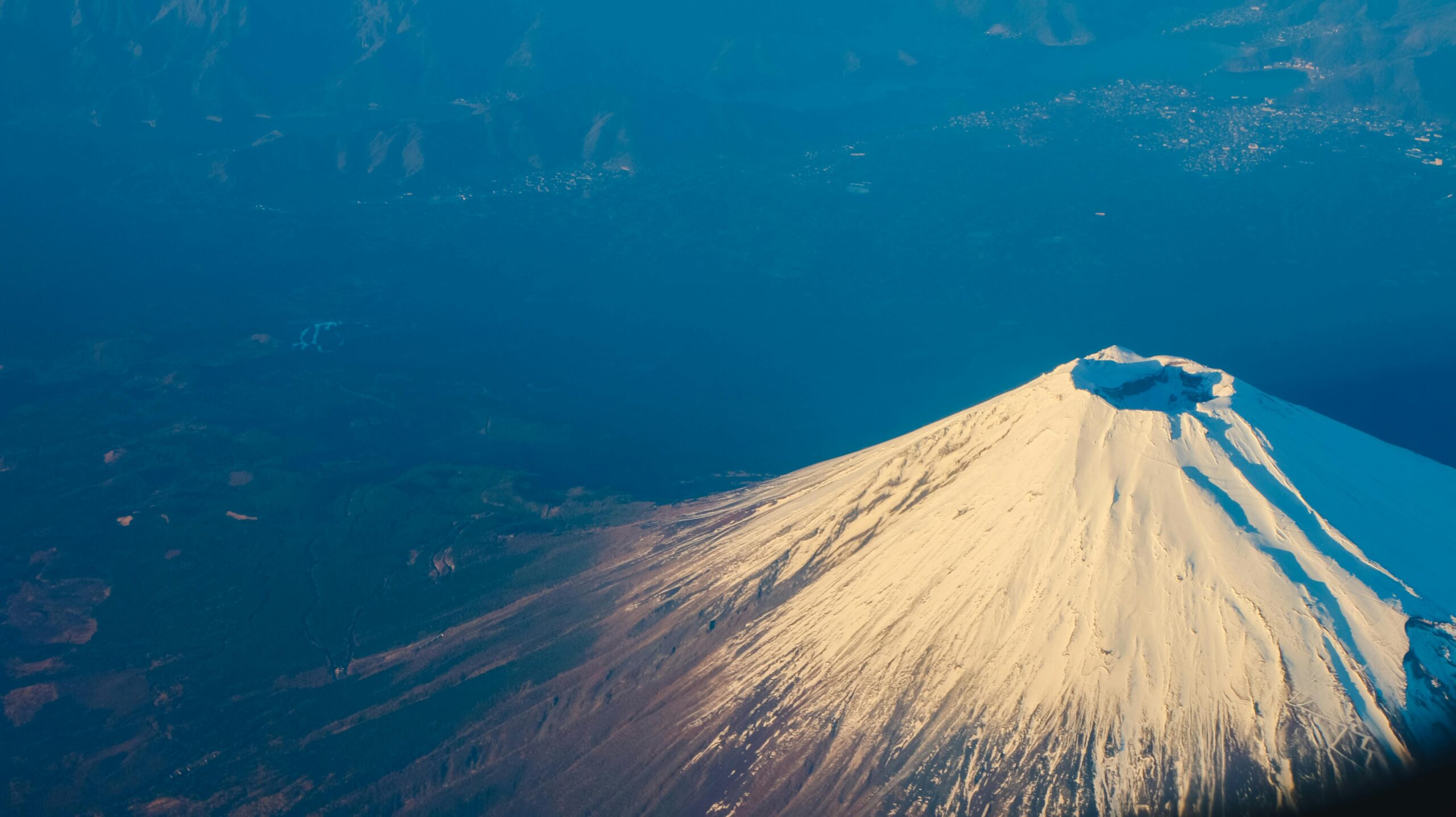
Volcanoes are some of the most powerful forces in nature. They shape landscapes, create new land, and even influence global climate. At their core, volcanoes are Earth’s way of releasing energy from deep within — a reminder that our planet is very much alive beneath the surface.
From the snow-capped cone of Mount Fuji to the black lava fields of Hawaii, volcanoes inspire awe and respect in equal measure. They can be destructive, yet they also give rise to fertile soils, vibrant ecosystems, and even entire islands.
What Is a Volcano?
A volcano is an opening in Earth’s crust where molten rock, gases, and ash escape from below the surface. This molten rock is called magma when underground and lava when it reaches the surface.
Volcanoes form at places where tectonic plates meet or where hot spots push magma upward through the crust.
Types of Volcanoes
Not all volcanoes look or behave the same:
- Stratovolcanoes: Tall, conical mountains built from alternating layers of lava and ash. Examples: Mount St. Helens, Mount Etna.
- Shield volcanoes: Broad, gently sloping mountains formed by fluid lava flows. Example: Mauna Loa in Hawaii.
- Cinder cone volcanoes: Small, steep-sided hills made of volcanic debris. Example: Parícutin in Mexico.
- Calderas: Large depressions formed when a volcano collapses after a massive eruption. Example: Yellowstone Caldera in the USA.
The Science of Eruptions
Volcanic eruptions occur when pressure builds up in magma chambers underground. The type of eruption depends on magma composition, gas content, and temperature:
- Effusive eruptions: Gentle flows of lava, often from shield volcanoes.
- Explosive eruptions: Violent blasts of ash, rock, and gas, typical of stratovolcanoes.
Eruptions can last minutes, days, or even years, and their effects can be felt far from the eruption site.
Volcanoes and Human History
Volcanoes have played key roles in shaping civilizations. Fertile volcanic soils supported ancient agriculture in places like Java, Italy, and Central America. Trade routes often passed near volcanoes, as these regions were rich in minerals.
At the same time, eruptions have caused devastation:
- The eruption of Mount Vesuvius in AD 79 buried Pompeii and Herculaneum.
- The 1815 eruption of Mount Tambora in Indonesia triggered a “Year Without a Summer,” leading to crop failures worldwide.
Life Around Volcanoes
Despite the risks, millions of people live near volcanoes. Why?
- Fertile soil: Volcanic ash breaks down into nutrient-rich soil ideal for farming.
- Mineral resources: Volcanic regions often have valuable minerals and geothermal energy.
- Tourism: Volcanoes draw visitors eager to witness their power and beauty.
Some volcanic landscapes also support unique ecosystems, with plants and animals adapted to survive in extreme conditions.
Volcanoes in Culture and Myth
Volcanoes have inspired myths and legends across the globe:
- In Hawaiian tradition, Pele is the goddess of volcanoes and fire.
- Ancient Romans linked volcanic activity to Vulcan, the god of fire.
- In Japan, Mount Fuji is a symbol of beauty and spiritual significance.
These stories reflect both reverence for and fear of volcanoes — forces that can create and destroy.
The Benefits of Volcanoes
While often seen as dangerous, volcanoes provide numerous benefits:
- New land: Lava flows create islands, like those in Hawaii.
- Geothermal energy: Harnessing heat from volcanic activity provides renewable power.
- Natural resources: Volcanoes produce minerals like pumice, obsidian, and sulfur.
Even after an eruption, volcanic areas can recover quickly, with plant life returning to rejuvenated soil.
The Risks and Challenges
Living near a volcano comes with hazards:
- Lava flows can destroy everything in their path.
- Ash clouds can disrupt air travel and damage crops.
- Pyroclastic flows — fast-moving clouds of gas and rock — are deadly.
- Long-term effects include climate impacts from ash and gases released into the atmosphere.
Modern monitoring systems aim to predict eruptions and save lives, but not all volcanic activity can be forecast with precision.
Famous Volcanoes Around the World
- Mount Fuji, Japan: A cultural icon and a dormant stratovolcano.
- Krakatoa, Indonesia: Its 1883 eruption was one of the most powerful in recorded history.
- Mount Kilimanjaro, Tanzania: Africa’s highest peak, with three volcanic cones.
- Eyjafjallajökull, Iceland: Known for its 2010 eruption that halted European air travel.
Each of these volcanoes tells a different story — of creation, destruction, and renewal.
Final Thought
Volcanoes are Earth’s natural architects, shaping landscapes on a scale both massive and intimate. They remind us of the planet’s raw power and its ability to create beauty from destruction.
To stand before a volcano is to witness the deep forces that built our world — forces that continue to shape it today. Whether quiet for centuries or rumbling with activity, volcanoes hold a timeless place in the story of Earth.