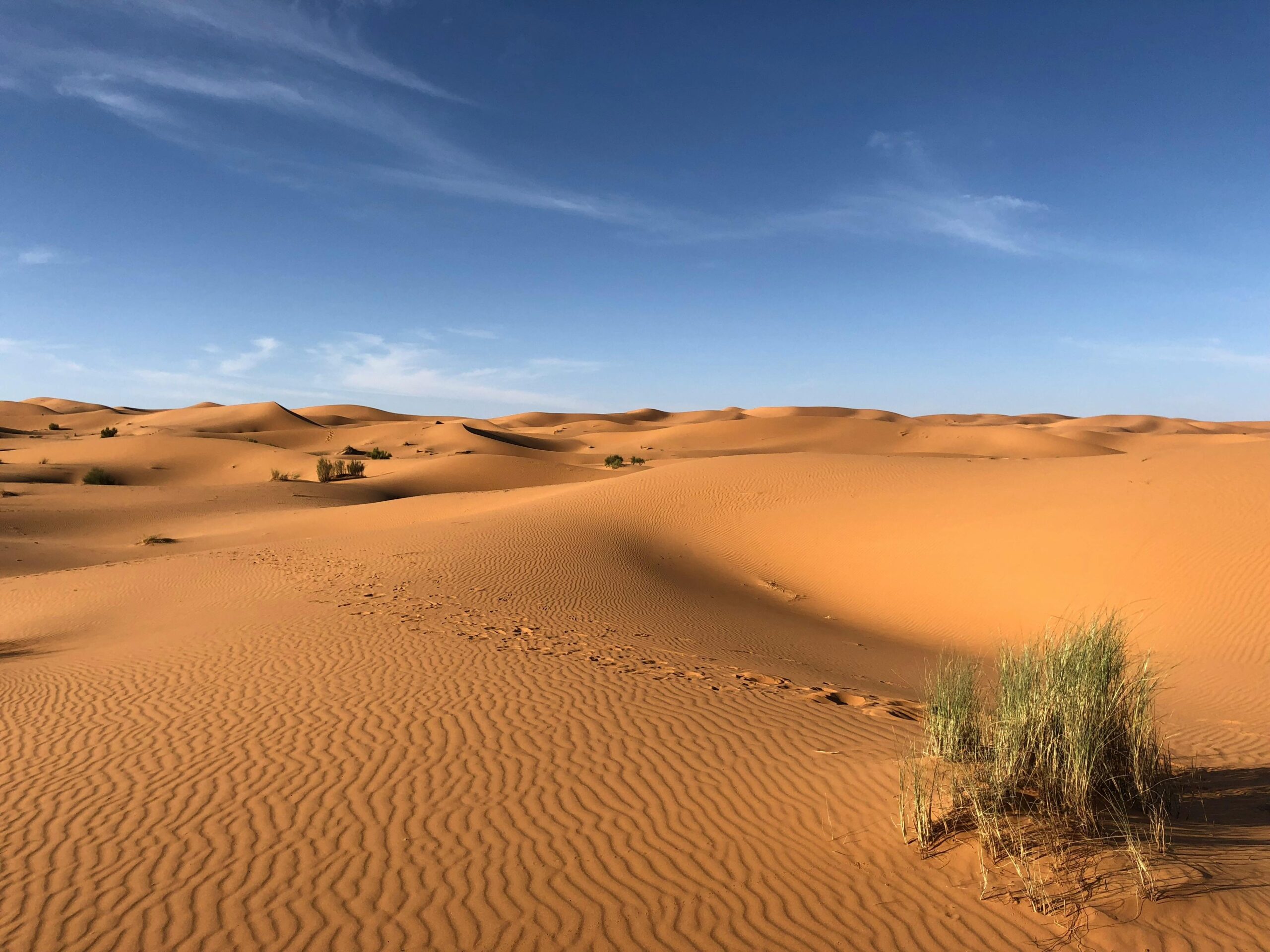
When most people think of deserts, they picture endless sand dunes under a blazing sun. While that image holds some truth, deserts are far more diverse, beautiful, and complex than many realize. These dry lands cover about one-third of Earth’s surface and are found on every continent.
They are places of extremes — scorching days, cold nights, rare but sudden rainstorms — and they host some of the most adaptable life on the planet. To truly understand deserts is to see beyond the emptiness and discover a landscape rich with resilience, history, and surprising beauty.
What Makes a Desert a Desert?
A desert isn’t defined by heat or sand, but by dryness. The key factor is low precipitation, usually less than 250 millimeters (10 inches) per year. Some deserts, like the Sahara, are hot and sandy, while others, like Antarctica, are cold and icy — yet both are deserts by definition.
Types of Deserts
- Hot and dry deserts: Like the Sahara in Africa or the Arabian Desert in the Middle East.
- Cold deserts: Such as the Gobi Desert in Mongolia or the Great Basin Desert in the United States.
- Coastal deserts: Like the Atacama Desert in Chile, one of the driest places on Earth.
- Semi-arid deserts: With slightly more vegetation, such as parts of the Kalahari in southern Africa.
Each type has unique plants, animals, and challenges for survival.
Life Against the Odds
Despite harsh conditions, deserts are full of life. Plants like cacti store water in their stems, while others have deep roots to tap underground moisture. Animals adapt in remarkable ways — fennec foxes with large ears to release heat, camels that can go days without water, and nocturnal creatures that avoid daytime heat entirely.
These adaptations turn what looks like a barren wasteland into a thriving, if hidden, ecosystem.
The Beauty of Deserts
Deserts are visually stunning in ways that are often underestimated:
- Rolling sand dunes that shift with the wind.
- Rocky plateaus and canyons carved by time.
- Dazzling night skies free from light pollution.
- Rare blooms that transform the landscape after rain.
Colors in deserts change dramatically with the light, from golden dawns to deep orange sunsets, and cool blue evenings.
The Human Connection
Humans have lived in deserts for thousands of years, adapting their cultures and lifestyles to survive. Nomadic tribes move with the seasons, herding animals and trading goods. Ancient cities like Petra in Jordan and Timbuktu in Mali grew from desert trade routes.
Deserts have also inspired art, literature, and spiritual journeys. Their vast emptiness can be both humbling and liberating.
Deserts in Myth and Story
In many traditions, deserts are places of testing and transformation. Religious figures have gone into the desert for solitude and reflection. Writers have used desert settings to symbolize isolation, endurance, and self-discovery.
These associations add depth to the physical experience of visiting a desert — it becomes not just a landscape, but a metaphor.
Challenges Facing Deserts
Modern deserts face environmental pressures:
- Desertification: The expansion of desert-like conditions into fertile land, often caused by overgrazing, deforestation, and climate change.
- Water scarcity: Increasing demands on limited resources.
- Urban expansion: Cities encroaching on fragile desert habitats.
Balancing human needs with ecological preservation is a constant challenge.
Visiting Deserts
Deserts can be awe-inspiring places to visit, but they require preparation:
- Dress in layers for extreme temperature changes.
- Carry plenty of water and know where to find more.
- Protect yourself from sun exposure with hats, sunglasses, and sunscreen.
- Respect local wildlife and cultural sites.
With the right approach, desert travel can be one of the most memorable experiences in nature.
Why Deserts Matter
Deserts play important roles in the global environment. They influence climate patterns, store minerals, and serve as unique habitats for specialized species. They are also reminders of nature’s power to adapt and endure.
In a world where we often equate abundance with beauty, deserts teach us that there is elegance in minimalism — in surviving with less, in valuing each drop of water, in finding life where it seems impossible.
Final Thought
Deserts may seem empty at first glance, but look closer and they reveal worlds of complexity, resilience, and unexpected beauty. They are places where life has learned to thrive against the odds, and where humans can reconnect with a sense of scale and simplicity.
Next time you see an image of a desert, don’t just think of heat and dryness — think of survival, history, and a beauty that doesn’t shout, but whispers across the sand and stone.